Studio Notes: A Pocket Sketching Kit for Short Walks
Problem — the friction of stopping to draw
Question: how do you make it easy to sketch small, honest studies while out for a short walk, without hauling a full art bag? The common obstacle is friction — the effort of finding supplies, settling down, and feeling prepared enough to work. For many people this friction prevents any drawing at all.
Principles — what a pocket sketching kit must do
Designing a kit for short walks relies on a few simple principles that focus attention and reduce setup time:
- Minimize weight and bulk. If it fits comfortably in a coat pocket or small crossbody, you’ll be more likely to carry it consistently.
- Prioritize multi-use tools. Choose supplies that serve more than one purpose (erasable pen + shading, water brush + light wash) to keep the kit small.
- Choose forgiving media. Mediums that tolerate quick marks and imperfect paper invite practice rather than perfection.
- Make it weather-resilient. Seal or protect the most vulnerable pieces (paper, graphite) and accept that wet conditions will limit what you can do.
- Keep the process short. Aim for 5–20 minute studies: quick structure, a few values, one detail.
Process — how I tested three compact kits
Over several stray walks I tested three different pocket sets, assessing ease of carry, speed of setup, and resulting sketches. Each test lasted 4–6 short study sessions in parks, market streets, and garden paths. I noted what caused delays or boosted enjoyment and adjusted each set to be more practical.
Examples — three kit configurations and a short review of each
1) The One-Pencil Study
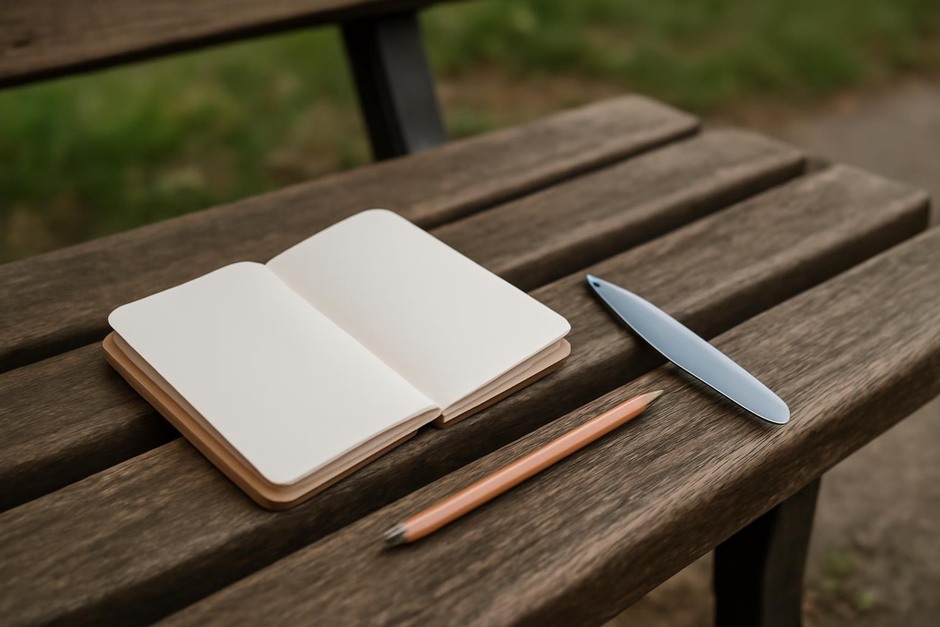
Contents: small 3.5 x 5.5" stapled sketchbook, H or HB pencil with short stub or extender, small paper clip to mark page.
Why it works: almost weightless and fast. The pencil is versatile for line and light value. The sketchbook size encourages small studies rather than finished pieces.
Review: fastest to deploy. Best for studying composition and gesture. Limited range of tones unless you add a stump or fingertip smudge.
2) The Gray-Wash Pocket
Contents: 4 x 6" watercolor postcard or heavy paper, a water brush (medium tip), one compact pan of neutral gray watercolor or a single gray wash in a small palette, and a mechanical pencil for line.
Why it works: introduces quick tone with minimal supplies. A water brush eliminates a separate water jar and keeps wet work tidy.
Review: adds mood and depth without much setup. The paper size allows slightly richer marks. Drying times are short for small washes. This kit requires slightly more care in damp weather.
3) The Mixed-Media Pocket
Contents: 5 x 7" concertina sketchbook or folded pages, a black felt-tip pen, a graphite pencil, and a tiny white gouache tube or opaque white gel pen for highlights.
Why it works: combining line with a contrasting white tool helps resolve form quickly. A concertina book can hold multiple views and be displayed on a small bench or railing.
Review: most expressive option. The felt-tip gives confident lines; white highlights lift small sketches. Slightly bulkier but still pocket-friendly in a jacket or small bag.
Concise practice checklist
Use this checklist before you set out or tuck it into the kit as a reminder:
- Choose one kit for the day — don’t carry everything at once.
- Check paper size fits your pocket or bag.
- Sharpen/prepare pencils and test water brush at home.
- Decide on a 5–20 minute time limit per sketch to encourage speed.
- Start with structure: big shapes, horizon, and focal point.
- Add one value or color to define depth; resist finishing details.
- Label date and location on the page for later review.
- Store wet pages between sheets or in a rigid folder until fully dry.
Review summary: a pocket sketching kit removes excuses by reducing weight and complexity. Different minimal configurations suit different goals — pure gesture, tonal study, or mixed-media exploration. Regular short sessions, even five minutes, are the real engine of improvement. Carrying something small that you enjoy using is more effective than chasing an ideal kit.