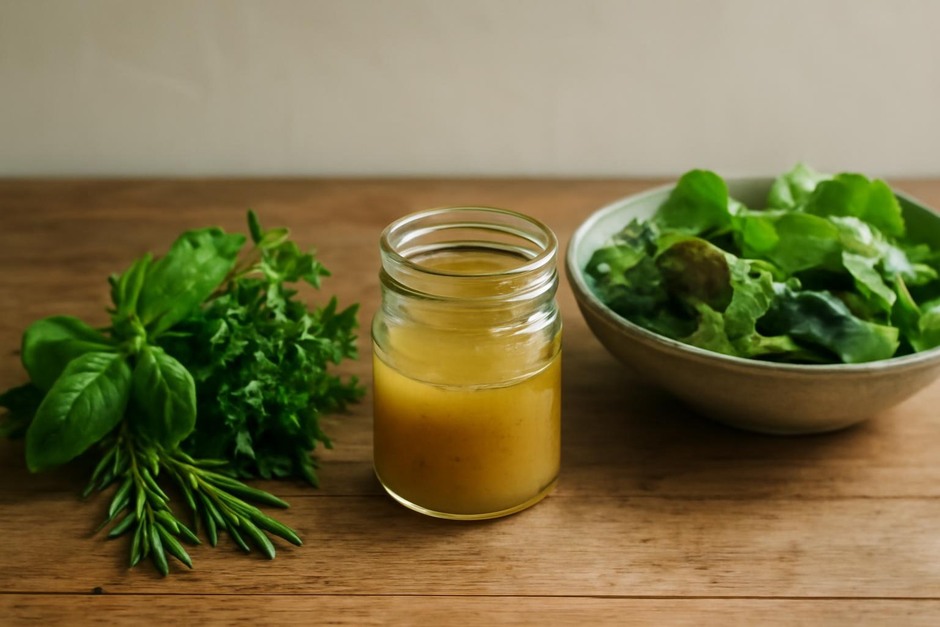
Five Field Experiments to Master a Seasonal Salad Dressing
Making a reliable, adaptable salad dressing is less a recipe and more a practiced sense: a skill you can build by careful tasting and simple experiments. These five small field experiments will help you learn to balance oil, acid, salt, and any seasonal interest—young greens, herbs, or a few edible flowers from your garden—so you can dress a bowl with confidence after a short walk or from your windowsill supply.
Overview: what to bring on each micro-experiment
Set aside 20–30 minutes for each experiment. Gather one neutral oil (olive or soft-flavored vegetable oil), one acid (lemon juice or vinegar), a clean pinch of salt, and one small jar or bowl. If you have herbs or greens—store-bought, garden, or a safely identified bit from a walk—bring a few leaves for tasting. Keep a notebook or phone to jot observations.
Experiment 1 — The 3:1 Taste Test (Balance baseline)
Goal: develop an internal sense of the classic oil-to-acid ratio and how it feels on different greens.
- Make three tiny dressings in separate jars: 3 parts oil to 1 part acid; 2:1; and 4:1. Add a very small pinch of salt to each.
- Taste each straight from a spoon, then taste on a plain lettuce or bitter leaf if available.
- Note which ratio you prefer with mild greens and which with bitter or peppery leaves.
Observation cues: does the dressing taste bright or flabby? Does acid cut bitterness or make mild greens sharp? Make a short note: “3:1 brighter on butter lettuce; 4:1 muffles lemon on spinach.”
Experiment 2 — Salt Calibration (Small increments)
Goal: learn how much salt pulls flavours together without overpowering.
- Choose your preferred ratio from Experiment 1. Make three small samples with increasing salt: a light pinch, a medium pinch, and a heavier pinch.
- Taste each with a neutral bread crumb or a plain leaf to examine seasoning without distraction.
- Note the smallest amount that makes the dressing “complete.”
Observation cues: salt should lift and clarify flavours. If it makes the dressing metallic or overly salty, you’ve gone too far. Record exact pinch sizes (e.g., “quarter-teaspoon to 2 tablespoons of dressing”).
Experiment 3 — Texture and Emulsification (Oil and body)
Goal: control mouthfeel—silky vs loose—and learn a quick emulsification method that holds on greens.
- Make two small batches using your chosen ratio and salt: one shaken vigorously in a sealed jar, one whisked with a spoon and one small spoon of mustard or yogurt added.
- Compare how each clings to a leaf and how it feels in the mouth.
- Try the jar again after resting for 10 minutes to see separation.
Observation cues: mustard/yogurt stabilizes and gives body; shaking creates a temporary emulsion. If you want dressings that linger on dense greens, favor the stabilizer method.
Experiment 4 — Seasonal Accent (Herb and bitter management)
Goal: learn how small additions change the profile—choose an herb or a little bitter leaf collected on a walk or from your window box.
- Add a tiny amount of chopped herb (parsley, chive, sorrel, or a floral petal) to a measured sample of your mastered dressing.
- Taste the dressing alone and then on a sample bite with the actual greens you plan to dress.
- Adjust one variable only: either add a drop more acid or a touch more oil, and note the effect.
Observation cues: herbs can brighten and change perceived acidity. If a herb makes the dressing feel dull, add a drop of acid; if it turns harsh, soften with a little more oil.
Experiment 5 — Scale and Store (Practical repetition)
Goal: translate your small tests to a family-sized jar and learn simple storage rules.
- Scale your final formula up (measure one tablespoon of finished dressing as your base and multiply). Mix in a clean jar and taste immediately.
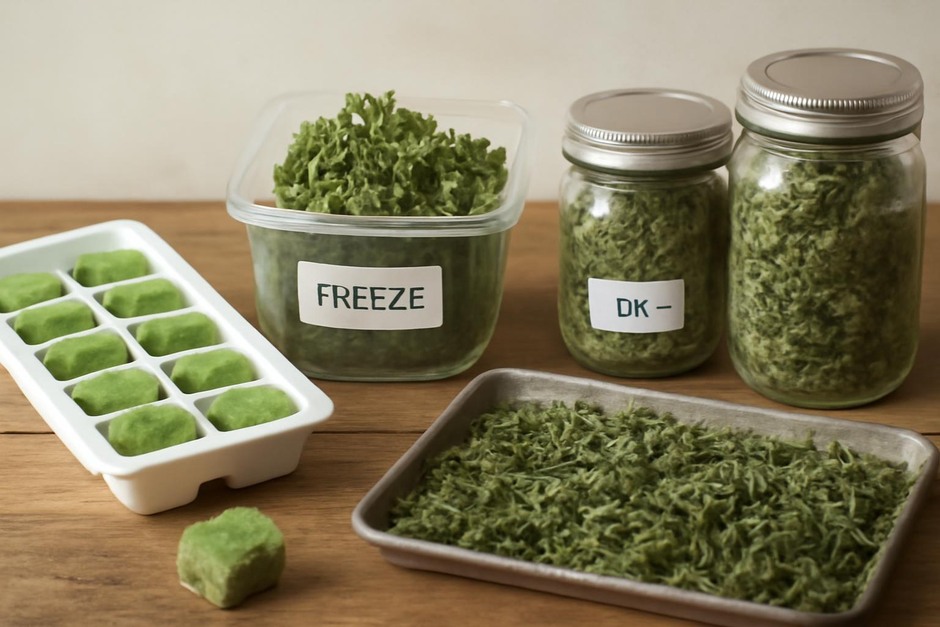
- Label the jar with date and content. Store in the fridge and taste again after an hour and after 24 hours.
- Note how separation, sharpness, or herb intensity evolves.
Observation cues: dressing often mellows after a few hours; whisk or shake before use. If herbs become bitter over time, add them at serving rather than during storage.
Putting it together
These experiments train you to observe small changes: a pinch of salt, a drop of lemon, a quick shake. After repeating the cycle a few times across seasons you’ll have a short mental library—what acidity suits young spring lettuces, what oil weight complements late-summer tomatoes, how much herb intensifies a meadowy garnish from a walk. Keep notes, make small jars, and treat each pick from garden or path as a prompt for another quick field test.
Practical note: when using any foraged plant, rely on local knowledge and positive identification. When in doubt, use herbs from your garden or the market for these experiments.